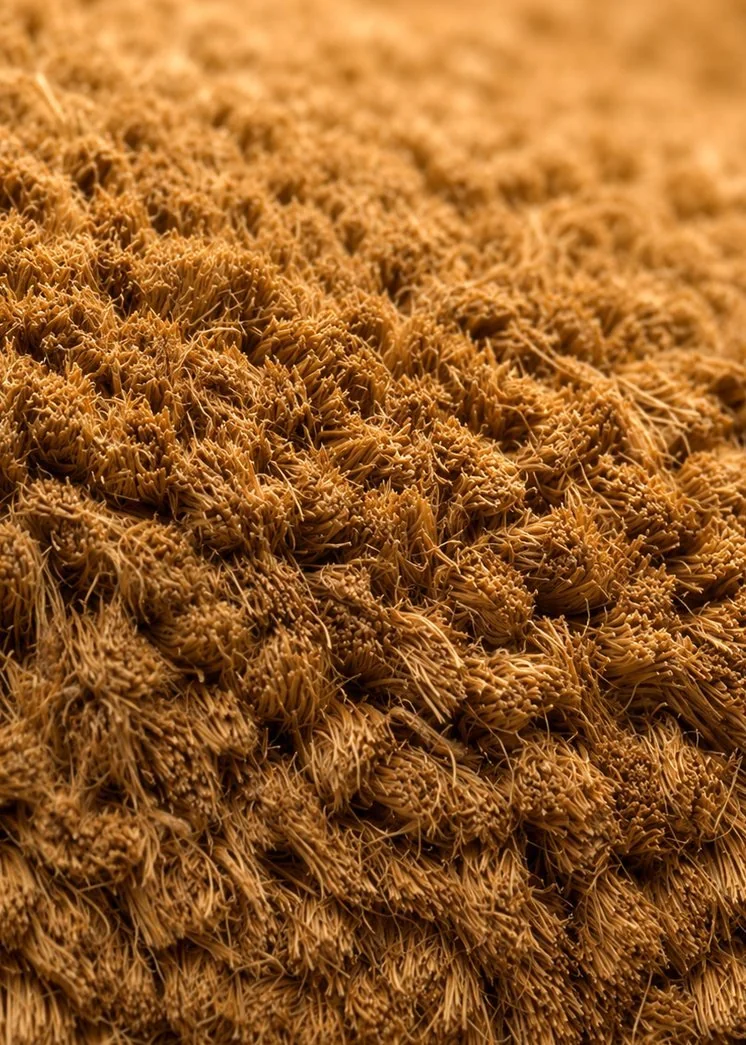
Ask what the style name describes
Treat faux-coir as an appearance description when screening a photo or listing. Ask the supplier to identify the face and backing separately and say whether any natural coir is present. Match the answer to the offered item or sample revision.
Judge texture with a physical sample
Compare how the samples look from the doorway and up close. Photograph the face from above and the edge from the side with a ruler. A flat motif can resemble a fibrous surface from a distance. If feel or pile matters to the order, record that requirement alongside the chosen sample.
Separate the printed design from construction
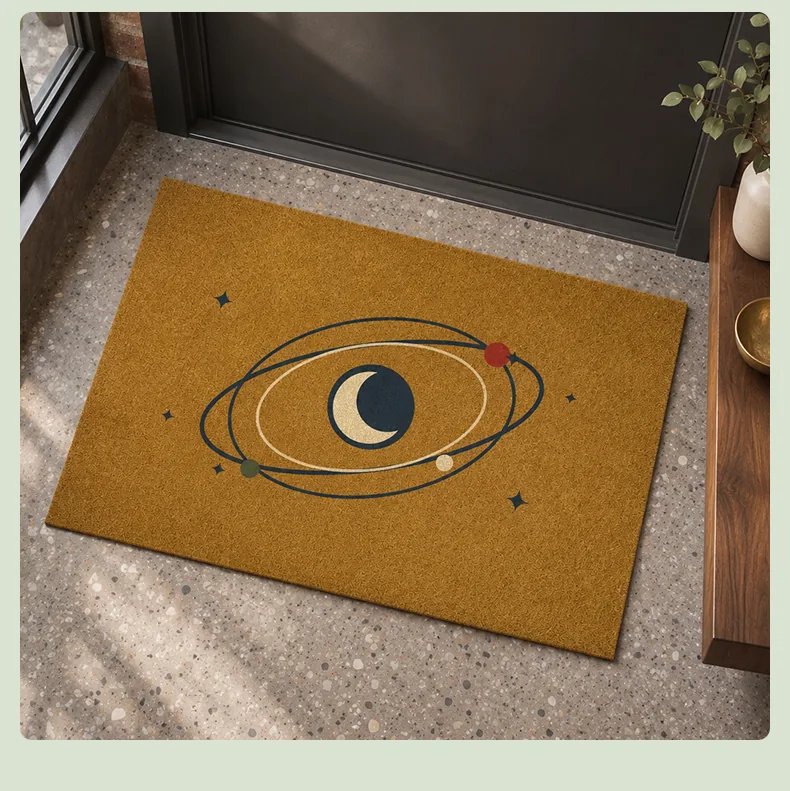
A colour pattern can change the look of the face without identifying the material below it. If the design is printed, ask for the proposed print area, orientation, and a physical example on that base. Record the style description and print code separately.
Use care instructions for the exact item
Confirm which tools and cleaners the supplier allows for the selected face, backing and print. If staff already use a brush or vacuum, check whether that particular tool is allowed and try it on the sample under the approved conditions. Record how the mat and floor will be checked before return.

Style and material confirmation sheet
| Label or observation | What it records | Written or physical confirmation |
|---|---|---|
| Faux-coir style | The intended visual direction | Exact face composition and natural-fibre status |
| Visible underside | The portion touching the floor | Backing composition and contact guidance |
| Colour or motif | The layout seen from the entrance | Physical print sample on the proposed base |
Questions buyers ask
Does brown color prove natural coir?
No. Appearance alone does not establish material composition.
Should the product title say natural coir before confirmation?
No. Use a qualified style description until the material is documented.
Related steps
Review your mat placement
Send the measurements, site conditions and any evidence your project requires.