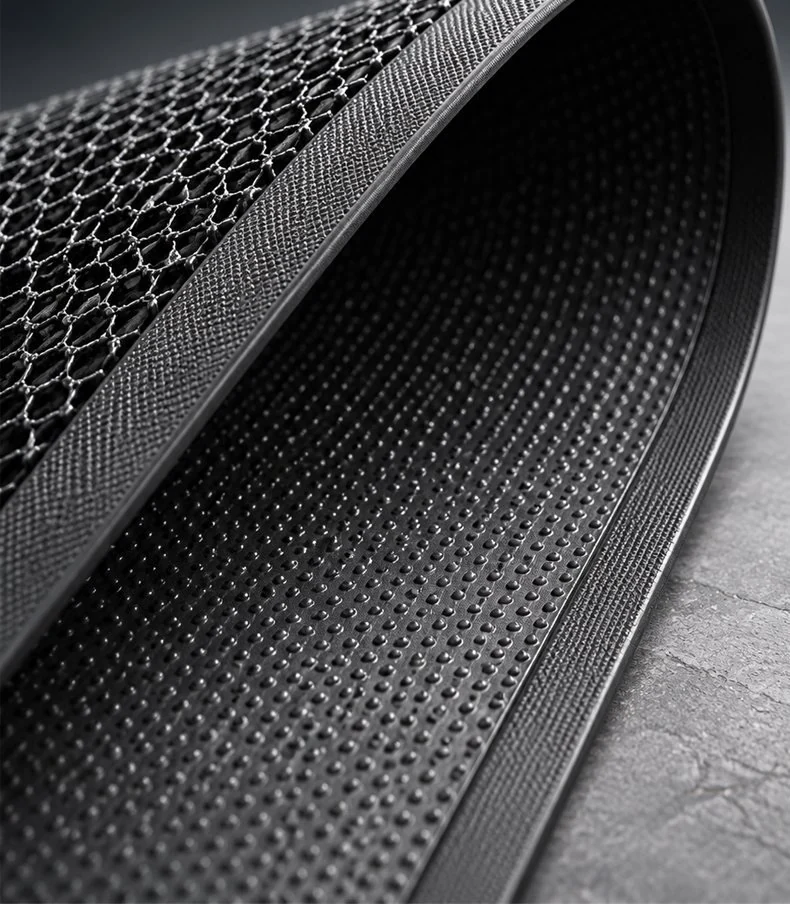
Look at the mesh face close up
Compare strand shape, spacing, opening size and how the surface feels on a physical sample. Look at its side profile. An opening seen from above may end at the backing, and grit can collect between the strands at a depth the usual cleaning method cannot reach.
Identify the backing independently
Turn the sample over to see which parts touch the floor. Ask for the backing composition and construction by sample or specification number. The folded reference image shows the two sides of one example. Confirm materials with written details for your item.
Examine the finished edges
Compare a cut edge with any attached border included in the proposal. Check whether the corners and joins lie as intended, then measure the highest edge and transition at the finish. Include the same finished edge in the sample and order description.
Test the actual floor and cleaning routine
Place the complete sample on its intended finish, using the site’s agreed observation conditions. Check contact, movement at approach points and how collected debris is removed. Inspect the underside and floor after cleaning and record the exact sample and routine.
Three-part mesh construction comparison
| Part | See on the sample | Confirm before ordering |
|---|---|---|
| Face | Check strands, openings and their depth | Face composition and approved cleaning method |
| Backing | Flip over and note actual contact points | Backing composition and floor guidance |
| Edge | View corners, joins and highest points | Edge type included in the finished size and order |
Questions buyers ask
Is a mesh appearance enough to state drainage performance?
No. Evaluate the complete construction under relevant conditions.
Can the backing be omitted from the specification?
No. It is central to floor contact and the proposed use.
Related steps
Review your mat placement
Send the measurements, site conditions and any evidence your project requires.