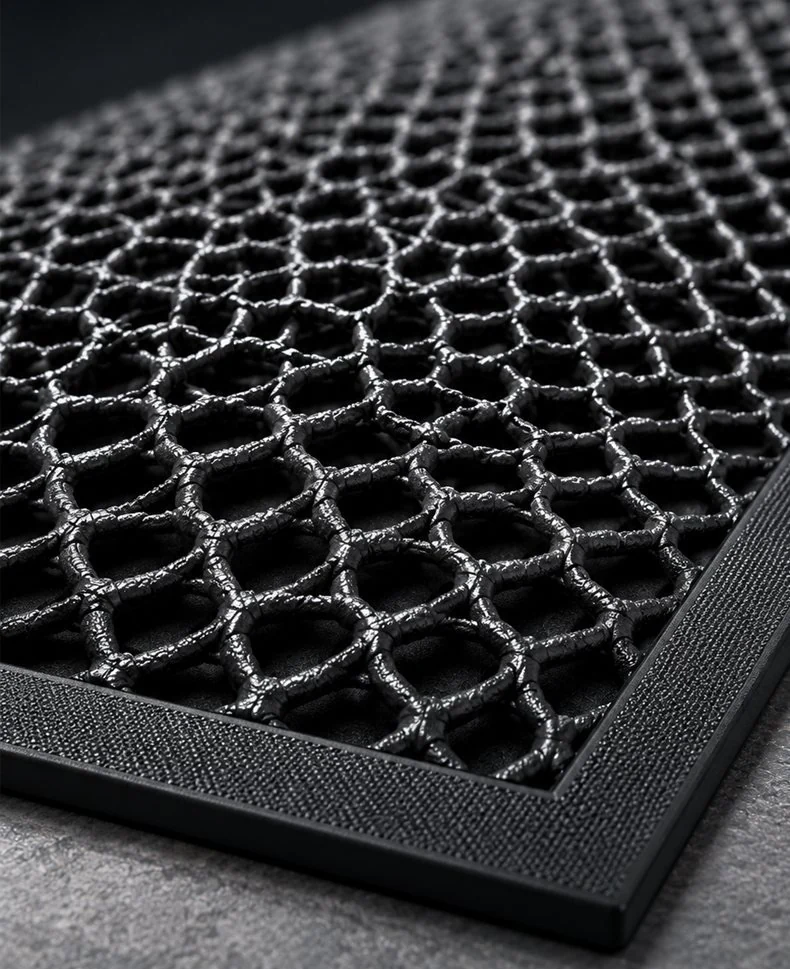
Compare visible surface geometry
Photograph each sample from above and at a low angle with a scale. Note strand width or opening size, raised features and areas where grit may collect. Keep the sample reference in the photo record.
Try the available cleaning method
Use an approved cleaning method on the kinds of debris expected at the site. Observe whether the tool reaches recesses and whether debris stays at the edges. Log cleaning effort and the state of the sample afterwards.
Separate feel and appearance preferences
Compare the samples in the intended light and with the footwear normally used, where the site permits. Identify which choice reflects preference, and which would require a measurable project criterion.
Request evidence for any performance threshold
If friction, wet performance or another rating is specified, ask for the product-specific test method, conditions and result. Use the texture photos to describe the sample being evaluated.
Texture comparison and evidence status
| Field | Write down for each sample | Decision output |
|---|---|---|
| Scale photos | Top and angled view, raised points and recesses | Comparable physical description |
| Cleaning access | Debris type, allowed tool and remaining debris | Cleaning effort or open issue |
| Project performance threshold | Report reference and covered conditions | Evidence available, pending or out of scope |
Questions buyers ask
Can rough mean certified anti-slip?
No. A rating requires the relevant product-specific test evidence.
Should photo closeups include scale?
Yes. A scale helps buyers interpret the actual texture size.
Related steps
Review your mat placement
Send the measurements, site conditions and any evidence your project requires.